

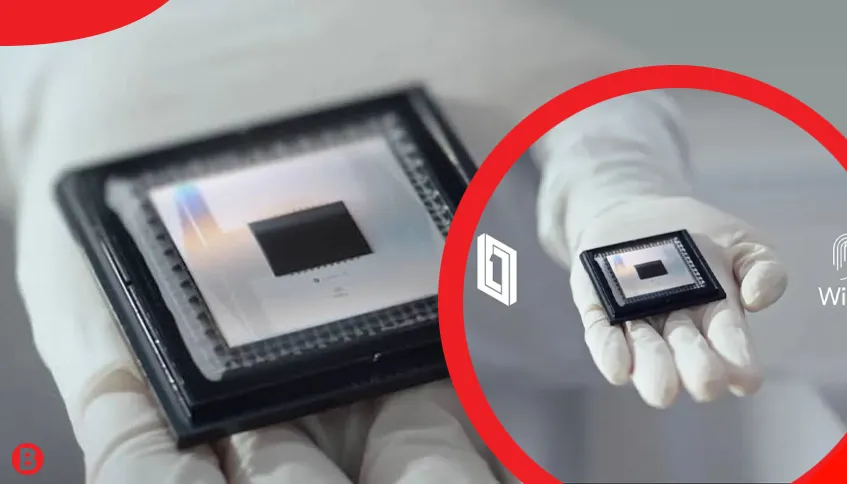
Quantum computing has progressed significantly between 2024 and 2026, with improvements in processing power, error correction, and quantum algorithms. The latest breakthroughs in quantum computing 2024 established important foundations for more reliable systems. Since then, Google, IBM, Microsoft, and university researchers have introduced technologies that could bring practical quantum computing closer, although substantial challenges remain.
What Is Quantum Computing?
Quantum computing uses the principles of quantum mechanics to process information differently from traditional computers. Conventional systems use bits representing either 0 or 1, while quantum computers use qubits, which can exist in combinations of states.
Two important properties make this possible: superposition and entanglement. These allow quantum algorithms to solve certain specialized problems efficiently. However, quantum computers are not automatically faster than classical machines, especially for everyday computing tasks.
How Quantum Computing Advanced From 2024 to 2026
The most important developments involved improving qubit reliability, reducing computational errors, and designing more efficient algorithms. Researchers increasingly focused on useful performance rather than simply increasing processor size.
| Year | Major Advancement | Significance |
|---|---|---|
| 2024 | Google’s Willow processor | Demonstrated improved quantum error correction |
| 2024 | IBM’s Heron processors | Improved quantum circuit performance |
| 2025 | Microsoft’s Majorana 1 | Advanced research into topological qubits |
| 2025 | Google’s Quantum Echoes | Demonstrated a specialized quantum computing advantage |
| 2026 | Caltech’s neutral-atom research | Proposed more resource-efficient quantum architectures |
| 2026 | Google’s cryptographic algorithms | Reduced estimated resources for certain quantum attacks |
These milestones illustrate progress across hardware, software, and scientific research.
Major Quantum Computing Breakthroughs in 2024
Google’s Willow Quantum Chip
Google introduced Willow, a 105-qubit processor, in December 2024. Its major achievement involved demonstrating that increasing the size of an error-correcting quantum system could reduce logical error rates.
This result addressed a longstanding problem in quantum computing. Although Willow performed impressively on specialized benchmarks, it did not establish practical superiority for ordinary computing applications.
IBM’s Heron Processor
IBM improved its Heron processor family during 2024, introducing a 156-qubit version with better performance characteristics.
The company also demonstrated increasingly complex quantum circuits. These improvements highlighted an essential principle: processor quality, connectivity, and operational accuracy matter as much as the number of available qubits.
Important Quantum Computing Developments in 2025
Microsoft introduced Majorana 1 in February 2025, presenting its research into topological quantum computing. This approach aims to protect quantum information through specialized physical properties.
However, important experimental claims remained scientifically debated, and the announcement did not establish a fully operational topological quantum computer.
IBM also introduced its Nighthawk and Loon processor directions. Nighthawk emphasized more complex quantum circuits, while Loon investigated technologies for advanced error correction.
Meanwhile, Google’s Quantum Echoes experiment demonstrated a specialized, verifiable quantum advantage using its Willow processor.
Key Quantum Computing Advances in 2026
Research during 2026 increasingly focused on reducing the hardware required for sophisticated quantum calculations.
Scientists at Caltech proposed neutral-atom quantum computer designs that could potentially perform demanding cryptographic calculations using fewer physical qubits than earlier estimates suggested.
Google researchers also developed more efficient methods for implementing Shor’s algorithm against elliptic-curve cryptography. Their work suggested substantial reductions in estimated computational resources.
However, these results were largely theoretical or simulation-based. Neither demonstrated that existing quantum computers could break widely deployed encryption.
Why Quantum Error Correction Matters
Quantum information is extremely sensitive to environmental disturbances, imperfect operations, and measurement errors. Consequently, calculations can become unreliable as their complexity increases.
Quantum error correction protects information by distributing it across multiple physical qubits to create more reliable logical qubits.
Researchers have improved established methods such as surface codes while investigating potentially more efficient alternatives, including quantum low-density parity-check codes.
These developments are essential for building fault-tolerant quantum computers capable of completing lengthy calculations accurately.
Quantum Computing Technologies Compared
Different quantum architectures offer distinct advantages, and no approach has established universal superiority.
| Technology | Main Strength | Main Challenge |
|---|---|---|
| Superconducting qubits | Fast operations | Requires extreme cooling |
| Trapped-ion qubits | Accurate operations | Scaling and operational speed |
| Neutral atoms | Flexible qubit arrangements | Complex laser control |
| Photonic systems | Uses light for computing | Photon loss |
| Topological qubits | Potential error protection | Unproven practical scalability |
Google and IBM primarily develop superconducting processors, while companies such as IonQ and Quantinuum work with trapped ions.
Real-World Uses of Quantum Computing
Quantum computing could eventually improve several scientific and industrial applications.
- Healthcare: Simulating molecules to support pharmaceutical research.
- Materials science: Investigating batteries, catalysts, and superconductors.
- Finance: Exploring portfolio optimization and complex risk models.
- Artificial intelligence: Researching specialized quantum machine learning algorithms.
- Cybersecurity: Understanding future threats to existing encryption methods.
Most applications remain experimental. Practical benefits must still be demonstrated against advanced classical computing techniques.
Can Quantum Computers Outperform Traditional Computers?
Quantum computers have already demonstrated advantages in selected experimental calculations. However, these results do not mean they outperform conventional systems across general computing tasks.
Classical computers remain more practical for everyday applications, including business software, web services, and ordinary data processing.
Future systems may combine quantum processors with traditional hardware, allowing each technology to handle calculations suited to its strengths.
Challenges Facing Quantum Computing
Despite recent progress, several technical problems continue to restrict practical quantum computing.
- High error rates: Quantum operations can introduce computational mistakes.
- Hardware complexity: Advanced systems require specialized equipment.
- Qubit stability: Quantum states are vulnerable to environmental interference.
- Scaling difficulties: Larger processors demand sophisticated control systems.
- Limited commercial applications: Many proposed advantages remain unproven.
Solving these problems will require improvements across hardware, software, and error correction rather than simply adding more qubits.
Quantum Computing and Data Security
Powerful fault-tolerant quantum computers could eventually threaten encryption methods such as RSA and elliptic-curve cryptography.
In August 2024, the US National Institute of Standards and Technology finalized its first three post-quantum cryptography standards.
These standards provide alternatives designed to withstand known quantum attacks on traditional public-key encryption.
Organizations handling sensitive information should evaluate their existing cryptographic systems and begin planning appropriate upgrades instead of waiting for powerful quantum computers to become available.
What’s Next for Quantum Computing?
Future progress will likely concentrate on reliable logical qubits, improved quantum algorithms, and larger fault-tolerant processors.
Researchers must demonstrate that increasingly complex quantum calculations can deliver measurable advantages over classical alternatives.
Commercial adoption will depend on technical reliability, operating costs, and meaningful applications. Although development continues, no definitive timeline exists for widespread fault-tolerant quantum computing.
What These Advances Mean for the Future
The latest breakthroughs in quantum computing 2024 helped establish foundations that researchers expanded throughout 2025 and 2026. Better processors, stronger error correction, and more efficient algorithms have brought reliable quantum computing closer.
For businesses and technology professionals, the priority is monitoring verified progress, exploring realistic applications, and preparing sensitive systems for post-quantum security requirements.
FAQs
What were the biggest quantum computing breakthroughs between 2024 and 2026?
Major developments included Google’s Willow processor, IBM’s hardware improvements, better error correction, and more efficient quantum algorithms.
How much has quantum computing improved since 2024?
Researchers have improved processor performance, logical qubit protection, and algorithm efficiency, although large-scale practical systems remain under development.
Which company leads quantum computing research?
Google, IBM, Microsoft, IonQ, and Quantinuum contribute important technologies. Leadership depends on the performance measures and hardware architectures being compared.
Can quantum computers solve practical problems in 2026?
They support specialized experiments and research, but broad commercial advantages over conventional computers remain limited.
Will quantum computers replace traditional computers?
No. Quantum processors are expected to complement classical systems by handling selected calculations rather than replacing everyday computing hardware.


